Archives for January, 2011

31
Jan

Resources for the occasional lutenist

A few months ago, I decided to purchase a lute. I was, at the time, obsessed with French Airs de Cour and wanted to delve into the lute accompaniments. Besides, I already had in mind to integrate viola da gamba in my music, and wanted to familiarize myself with scales, fingerings, and chord positions (apparently, some similar tunings can be used on viola da gamba and lute).

It basically looks like an inverted coffin with a neck

I bought a cheap (lutenists, please don’t read the rest of this sentence) eight course, 15 strings flat lute from Pakistan (told ya). It is a crime to some, but to a broke student that has no intention to become a lutenist, it’s really not that bad. One gets a rough sense of the instrument and might avoid some blatant writing mistakes while giving the impression of being part of a Goth/Baroque band.


Roosebeck Flat Lute

Roosebeck Flat Lute


The instrument can be purchased online at Mid-East instruments. Once again, it’s only a nice working tool. If you want to be serious about the lute, seek advice from a professional lutenist (visit The Lute Society of America‘s website).

[Read more →]

25
Jan

French Composers’ Names – Tristan Murail

This week’s composer is one of the founders of The Ensemble l’Itinéraire, and a leading figure in Spectral music: Tristan Murail.


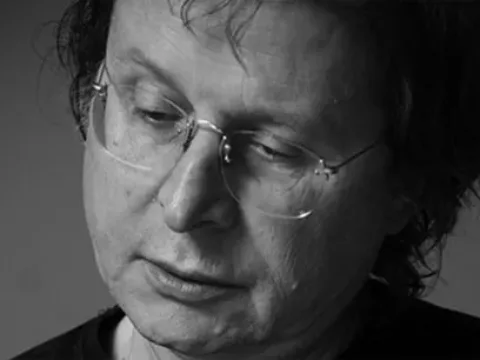
Tristan Murail © Elisabeth Schneider

Tristan Murail ©Elisabeth Schneider


The French u has no equivalent in English. If you’ve studied German, it is, though, similar to the German ü. An easy way to pronounce a decent u is to close you lips as if you were pronouncing a very tight o (as in Figaro) while saying -ee. Use your lips. No lips, no u .


Audio clip: Adobe Flash Player (version 9 or above) is required to play this audio clip. Download the latest version here. You also need to have JavaScript enabled in your browser.

Link to MP3 – Tristan Murail

Did you know that before studying composition with Messiaen in Paris, Murail got degrees in classical Arabic and Maghrib Arabic as well as a Bachelor’s degree in economic science and a degree from the Paris Institute of Political Studies?

Was this helpful? Is there any other name (composer, piece, instrument, etc.) that you would like to see on these pages? Just post a comment or find me on Twitter: @tonalfreak.

24
Jan

5 questions to Laurence Humier (industrial designer)

In this first installment in a series of short portraits/interviews, I’ve asked 5 questions to Laurence Humier, an industrial designer.

Laurence Humier/Miss Design (photo Alessio Guarino)

What is the importance of music in your work? Are you inspired by musical concepts such as rhythm, counterpoint, dynamics, texture etc.?

I love the emotion, the energy that music can communicate, a concert, an evening at la Scala. I hope that my products, my work, and my working relationships also communicate an energy.

Besides, it is true that I work on simple forms (Moebus strip, harmonic structure, etc.) and that I give them a new use. I never wondered about “music in my work” but what I can say is: music is 7 notes and 1001 possible combinations and I love this idea!

[Read more →]

20
Jan

French Composers’ Names – Camille Saint-Saëns

The next composer that might need our attention in this series intended to help people pronounce French composers’ names is probably Camille Saint-Saëns.

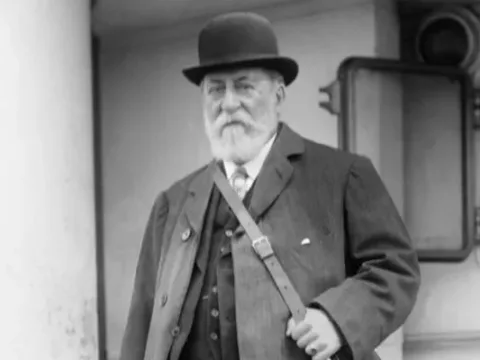
Camille Saint-Saëns (1835-1921)

Camille Saint-Saëns (1835-1921)

The diacritic, the mark, on the e is called a tréma in French. It consists of two dots ( ¨ ) placed over a vowel, used to indicate diaeresis. It is very clear in a word like maïs (corn): the combination of a and i would give an è sound, but the diaeresis is here to prevent this combination: mah – eess.

Now, sincerely, as a French person, I would say that Saint-Saëns’ name is also confusing for us. The tréma appears on a vowel followed by an -n, usually triggering a nasal sound… In this context, what is one supposed to do with the diaeresis?!

Anyway… Here’s the MP3:

Audio clip: Adobe Flash Player (version 9 or above) is required to play this audio clip. Download the latest version here. You also need to have JavaScript enabled in your browser.

Link to MP3 – Camille Saint-Saens

And here is a great HD video of Saint-Saëns’s Violin Sonata No. 1 in D minor, performed by Grace Fong and Chee-Yun during the 2009 Innsbrook Institute.

Saint Saens' Sonata #1, parts 1&2

Did you know that Saint-Saëns died in Algiers?

Was this helpful? Is there any other name (composer, piece, instrument, etc.) that you would like to see on these pages? Just post a comment or find me on Twitter: @tonalfreak.

17
Jan

Serif or sans serif?

How often should one redesign one’s website? The cookie-cutter answer is around 24 months, and in my experience, it is about right. My web design clock has been ticking for a while, and I have started to ask myself the usual questions: what kind of impression should the website leave? Shall I use warm or cool colors? A triad of colors? A tetrad of colors? etc. Finally, the key question comes up: serif or sans-serif?

[Read more →]

13
Jan

French Composers’ Names – Olivier Messiaen

Since I hear a lot of people (professors, performers, composers, etc.) having a hard time pronouncing some complicated French composers’ names, I decided to modestly record myself and post the sound clips on my blog.

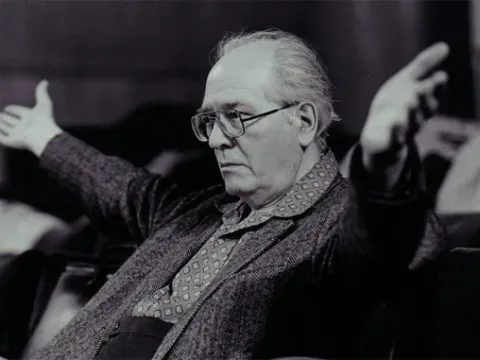
Olivier Messiaen (1908-1992)

Olivier Messiaen (1908-1992)

The one that suffers most, I think, is Olivier Messiaen. The combination of three vowels and an -n is actually quite unusual in French, so don’t feel bad if you’re not 100% sure of the pronunciation.

Audio clip: Adobe Flash Player (version 9 or above) is required to play this audio clip. Download the latest version here. You also need to have JavaScript enabled in your browser.

Link to MP3 – Olivier Messiaen

And now, two minutes of Turangalîla in HD:

Messiaen: Turangalîla-Symphonie / Rattle · Berliner Philharmoniker

Olivier Messiaen: Turangalîla-Symphonie
Sir Simon Rattle, conductor · Berliner Philharmoniker
Pierre-Laurent Aimard, piano · Tristan Murail, ondes Martenot
Recorded at the Berlin Philharmonie, 11 September 2008.

Was this helpful? I am planning on posting more, but can you think of a French name that you find challenging? Or maybe the name of a piece (Le Marteau sans Maître, etc.)? Please, leave a comment and I’d be glad to post it!

Next Page »