Archives for October, 2011

31
Oct

Isotone: A Collision of Music and Physics at Symphony Space

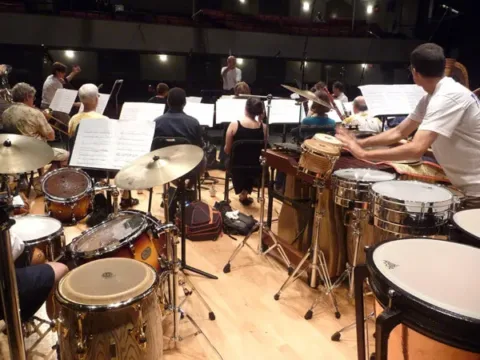
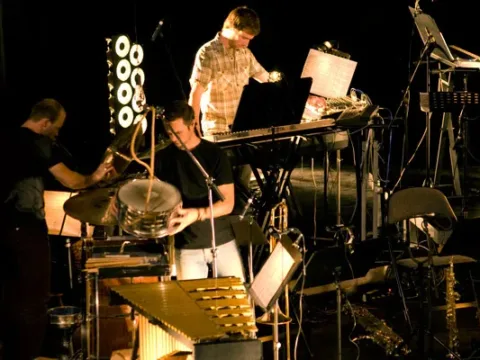
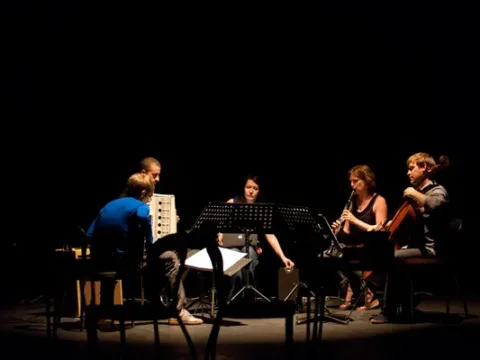
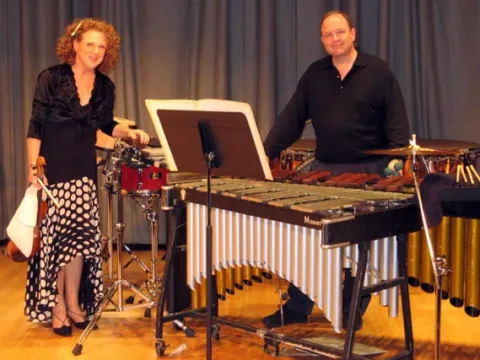
“Isotone: A Collision of Music and Physics” (Symphony Space, Leonard Nimoy Thalia, October 24th) certainly lived up to its name. Featuring two percussionists, two vocalists, violin, and piano (though not all together on all pieces), Isotone captured the excitement, energy, and humor, as well as the dangers, of physics. This concert was the NYC premiere of the program; violinist-and-percussionist couple Susan and Scott Eddlemon have taken the Isotone program all over the country. The other performers were Larry Spivack on percussion, Pam Roberston on piano, and vocalists Christina Mullikin and Sara Reed.

The stage setup was immediately impressive simply due to the incredible variety of percussion instruments packed onto it. Furthermore, despite a hardy job of drum-Tetris on the part of the stage crew and musicians, not every piece of equipment would fit at once, and there were several lengthy equipment changes as various large resonant objects were carted on and off. All of the intricate-looking paraphernalia evoked a laboratory, and in fact different pieces utilized both a spectroscope and a Van De Graaff Generator.

Victoria Bond

[Read more →]

29
Oct

Music Education in the UK

The Henley report on music education in the United Kingdom emphasised the value and importance of music making as a practical skill and how much this can enrich and aid the development of young people’s lives. This comprehensive survey lacked a detailed account of class music lessons and accentuated the role of extra-curricular music making. A music education based on the development of creative and practical skills in music is in no way a bad thing but how important is the content in class music lessons and particular the use of western art music? Are we offering our pupils a rigorous subject-based curriculum in music or is it just a series of practical activities that develop confidence in singing, playing and composing with a fleeting acknowledgement of the great works of music history? Exploring great works of the western art tradition should form an essential part of the music curriculum from the early years and we should strive to create culturally aware pupils that not only have an understanding of the breadth and depth of ‘classical’ music but will feel confident in being part of and perhaps even contributing to the vibrant classical music scene on offer today.

[Read more →]

28
Oct

Sequenza21 brings ACME at Joe’s Pub

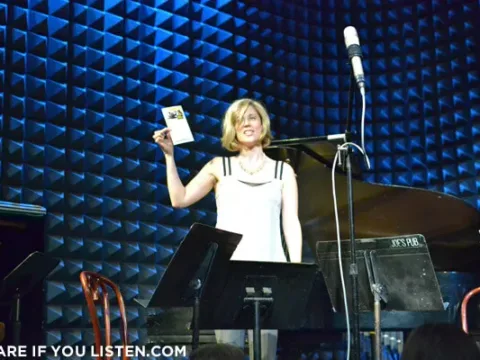
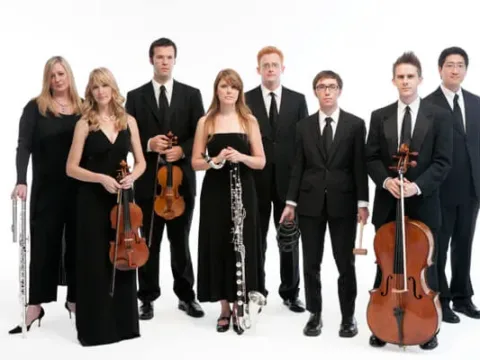
Very few classical music blogs are as popular as Sequenza21, and many blogs in that position would just stick to what they routinely do. Well, Jerry Bowles and his team don’t and with the funds they are able to raise through advertising, grants and donations, they produce occasional concerts such as the one that was presented at Joe’s Pub this Tuesday night (with the generous support of Manhattan New Music Project). The concert featured music by 9 composers performed by ACME (American Contemporary Music Ensemble), itself led by artistic director and cellist Clarice Jensen.

Nancy Kleaver, Executive Director of MNMP

[Read more →]

27
Oct

SONiC Festival – Alarm Will Sound at Roulette

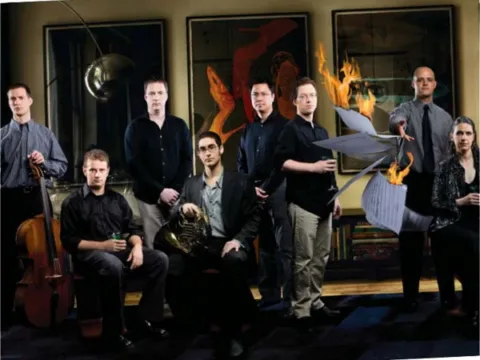
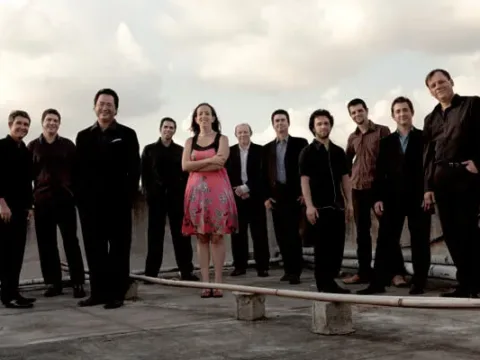
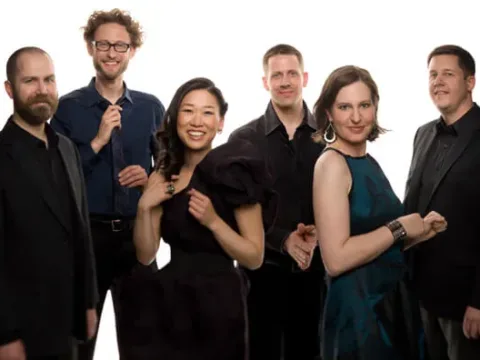
The new music ensemble Alarm Will Sound put on a concert of six contemporary works on Friday, October 21st (as a part of the SONiC new music festival) at the beautiful Art Deco theater hall of Roulette, located in the arts district of Brooklyn. As in most such concerts of new music, the different pieces were incredibly varied in length, structure, tonal language, and almost any other musical attribute one could think of. Additionally, though all 20 members of AWS played or sang or both on every piece, there were some differences between the pieces’ instrumentations: besides the usual doublings one expects from classical players (the flautist switching to piccolo, for instance), the concert included electric violin, electric bass, electric guitar, accordion, two vocal solos, and several instances of either backing vocals or strange gasps, sighs, and other nonstandard vocalizations from various members of the ensemble.

Alarm Will Sound

Alarm Will Sound

[Read more →]

26
Oct

SONiC Festival: American Composers Orchestra @ The World Financial Center

Any concert of recently composed orchestra music by young composers, as the American Composers Orchestra presented Saturday at the Winter Garden of the World Financial Center as part of SONiC Festival, is guaranteed to provide a clear impression of how young composers are thinking about the orchestra.  It is also perhaps doomed to provide a similarly clear impression of how young composers are thinking about the orchestra.  That high-wire act lends an excitement, a danger, to new music concerts that standard-rep love-fests just don’t have, and can’t have.

American Composers Orchestra. Photo credit: Michael Geller

[Read more →]

24
Oct

Brian Elias performed by the BBC Symphony Orchestra on NMC

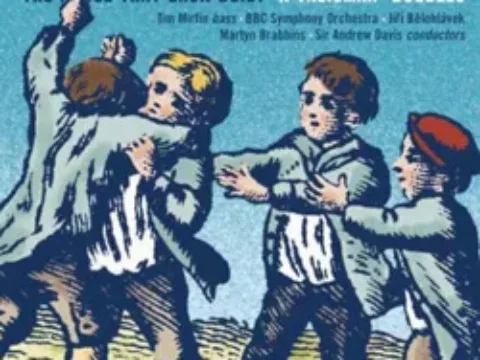
Brian Elias (b. 1948) spent his early life in Bombay before moving to London. Three of his later orchestral works – all performed by the BBC Symphony Orchestra under three different conductors – are presented on a recently released disc on the British based NMC label. NMC Recordings ‘is devoted to the promotion and preservation of Britian’s musical heritage through acclaimed recordings of music by the best of today’s composers, performed and recorded to the highest standards.’ This recording fulfils that aim with confidence. ‘The House that Jack Built’ (2001) – conducted by Sir Andrew Davis – displays Elias’ sense of drama in realizing the playground that is the scene for this work and skilful orchestration; there are references to nursery rhymes  through brief melodic fragments yet these are darkened through evocative timbres and orchestral colourings. This is an engaging recorded performance that highlights Elias’ control of structure and orchestral sound. Elias’ sound is distinctively modernist and British yet remains unique among others of his generation such as Anthony Payne and David Blake.

‘A Talisman’ (2004) – conducted by Martyn Brabbins with the bass Tim Mirfin – was a Cheltenham Festival commission. The text comes from an amulet inscribed with Hebraic text – a gift given to the composer’s mother. The text, as the composer writes in the beautifully presented liner notes, is not all translatable but for him ‘the amulet was, above all, an object of devotion and a heartfelt, passionate and most moving appeal for help.’ The work is certainly passionate and the vocal line is never obscured in the delicately scored opening; the long fluid vocal lines and declamatory moments are powerfully sung by Mirfin. The trumpet is prominent in this work and as Elias writes in the notes ‘as the text is so dominated by angel names, I have given the trumpet, an instrument very strongly associated with Gabriel and other angels, a prominent part’. The work is structured to reflect the amulet and as such is in two sections. This is a colourful performance which shows Elias’ characteristic skill at capturing real drama in his orchestral writing.

The CD has a more recent orchestral work ‘Doubles’ (2006) as the final work on the recording. This six-movement work – conducted by Jiri Belohlávek shows much more of a darker and vibrant approach to orchestration and its writing is as virtuosic as the performance. The title refers not only to the doubling of the first three movements by the last but refers also to the French term ‘double’ which referred to a variation in 18th century keyboard works. There are some beautiful sonorities in this work that demonstrates a penchant for solo brass and brass-ensemble timbres. The  consistency of the orchestral writing shows Elias has a soundworld that is unique and worthy of exploration. NMC’s release is worth exploring, as is other works by the composer.

Brian Elias/BBC Symphony Orchestra/ Jiri Belohlavek, Martyn Brabbins, Sir Andrew Davis, conductors /Tim Mirfin, bass / The House That Jack Built (NMC) – Buy on Amazon

Steven Berryman is a composer and teacher working and living in London. He is currently completing his PhD in Composition at Cardiff University (2011). Follow him on Twitter: @Steven_Berryman

Next Page »