Archives for November, 2011

30
Nov

Walking the line between music and chaos: Hubert Howe’s Clusters on Ravello Records

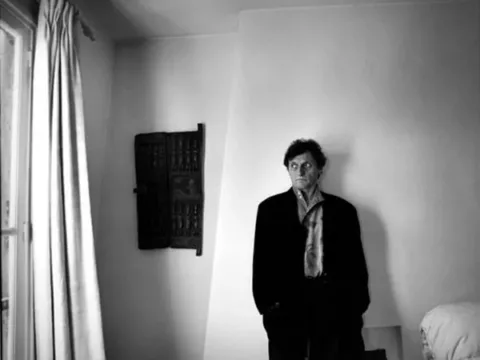
There are many elements of music which we take for granted, especially in traditional Western music, which Hubert Howe does not. These include the even-tempered scale and the concept of standard harmonics. Even the (relative) consistency of instrumental timbre, which is common to almost all music around the world, is eschewed by Mr. Howe in favor of his computer-generated sounds.

This album is part of an ongoing experiment in the outer limits of what can be done with music, walking the line between music and chaos. In Howe’s music, the line is frequently crossed. He created this album entirely using the CSound program (authored by Barry Vercoe). The user of this program can design artificial instruments, as well as override conventional acoustical physics, by selecting the partial overtones created by the notes played.

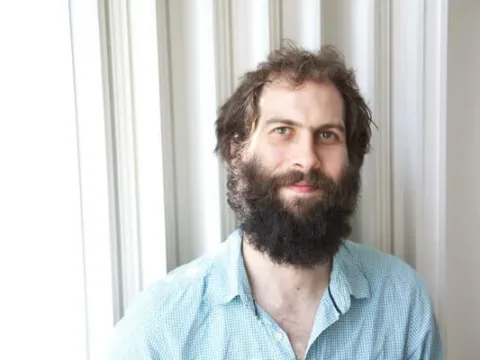
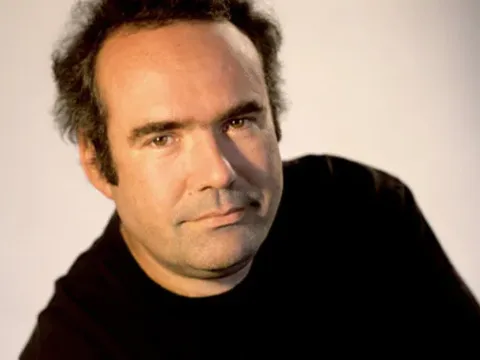
Hubert Howe

All of these intricate devices combine to create an alien atmosphere of sound. The first piece, Clusters, opens quietly, with what sounds like an organ, then throwing in harp-like glissandi, as the motion moves perpetually upward. There are some traditional devices used, such as the control of consonance and dissonance, and a prolonged call-and-response section. It all builds to an abrupt end.

The second track, Inharmonic Fantasy No. 2, sounds quite similar to the first, but it appears to be a study of vibrato, ranging from flat tones to heavy vibrato. Sometimes you think you can hear bells, and there are some interesting moments with a shimmering quality, but many of the sounds produced are cacophonic and difficult to listen to.

[Read more →]

29
Nov

50 Years of Minimalism: Rock ‘n’ Rollers @ Kings Place, London

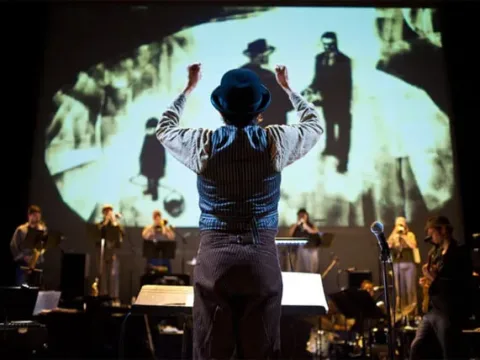
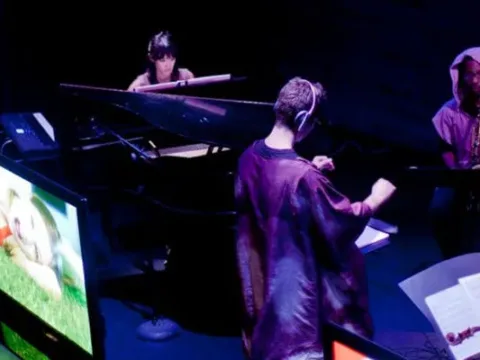
I felt fortunate to attend the final concert that formed part of a short series at Kings Place, London, called ’5o Years of Minimalism’. Igor Toronyi-Lalic curated the series and from what I saw and heard at the concert this was clearly something that was crafted with real care and inventiveness. The whole evening was a slick affair with so much attention to detail down to skillful lighting and interval and exit music – both tape works – by Terry Riley (Bird of Paradise, 1964) and Laurie Anderson (Time to Go (for Diego), 1977).

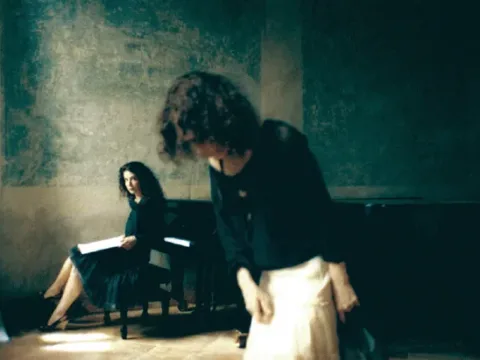
Labèque sisters – Photo by Brigitte Lacombe

[Read more →]

28
Nov

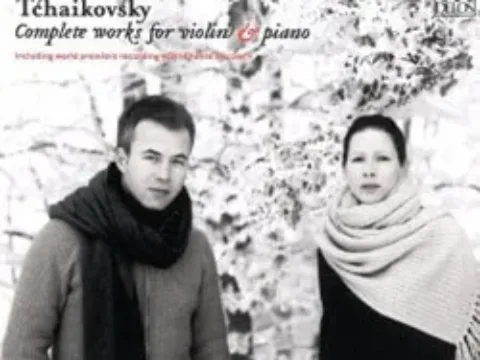
Delos’ Release of Tchaikovsky’s Complete Works for Violin and Piano Delivers

DelosThe Delos label’s new disc of Tchaikovsky’s complete works for violin and piano delivers consistently excellent interpretations of a frequently misunderstood composer. Sasha Rozhdestvensky’s playing has those qualities that seem to come best from Russian violinists: velvety dark lows, lyricism dripping with expression, and virtuosic ease that maintains a raw emotional state. Pianist Josiane Marfurt contributes a crystal clear clarity of voices and sensitivity to each new musical moment. The recording maintains a sense of spontaneity and in-the-moment interaction all too frequently lost in the studio.

The opening track, Sérénade Mélancolique, Op. 26, is convincing proof of the duo’s ability to capture the changing moods Tchaikovsky wrote. In the opening, Rozhdestvensky is able to achieve a dark and despondent tone with an incredible soft touch on the violin. As the music moves to a lighter mood, Rozhdestvensky’s tone changes perfectly to match the music, and the eventual reaches into the upper extremes of the instrument are bursting with exuberance while maintaining a sensitivity to the music. Marfurt matches these changes in tone on the piano, and provides a clear build-up towards the climactic moments, playing with a keen sense of structure as well as attention to each detail.

[Read more →]

26
Nov

Choral Chameleon’s Tempus, a fun journey through “Time”

Last Sunday evening, the innovative Manhattan-based choir Choral Chameleon presented an eclectic program titled “Tempus: Art of Time and Concord.”

Choral Chameleon has obviously built up a devoted following in their nearly four years of existence.  The venue, John Street Church, a mid-size structure in downtown Manhattan, was filled save for a few cordoned-off rows.  Quite notably, the palpable pre-concert enthusiasm of the audience, (comprised of young and old and everyone in between), was a welcome start to the show.

­­“Tempus” was built around Stephen Chatman’s ethereal Time Pieces, a dynamic four-movement work on the theme of “time.” Time Pieces is a true choral gem filled with stylistic variation and beautiful tonalities, and one that I would recommend highly to advanced chamber ensembles.  Surrounding these movements was varied fare from composers as diverse as Guerrero, Britten, and…Cyndi Lauper, in addition to other newly-composed pieces.  The musical direction was handled confidently by Vince Peterson and the choir was overall quite polished.  In particular, the sopranos as a group achieved a beautiful pure tone and their voices were balanced nicely with the others.  Also, the choir should be commended for their excellent diction.  The words were consistently crisp and intelligible.  Percussionist Erika Johnson played with aplomb throughout the program. I found Time Pieces IV: Clocks and Sonnet 12 by Thomas Conroy especially impressive as they both included complex vocal percussion that was obviously well-rehearsed.  Particularly exciting was Joseph Gregorio’s Look Back on Time With Kindly Eyes, a 12-part canon in which each singer is a soloist.  The choir sang with great effect from the balcony, the voices moving around overhead.  Cyndi Lauper’s hit song “Time After Time” (arranged for the choir by Erika Johnson) and soprano, Erika Lloyd’s own “Time Pops Bubbles” were upbeat tunes that had the audience nearly dancing in the aisles.

[Read more →]

25
Nov

Gabriel Kahane and Orpheus Symphony Orchestra at Galapagos

Galapagos Art SpaceOn Sunday, November 20th, at Galapagos Art Space in Brooklyn, singer/songwriter/composer/pianist/guitarist Gabriel Kahane appeared in concert with the prestigious, conductor-less chamber ensemble Orpheus. Kahane is currently serving as the group’s composer-in-residence. The concert filled me with both elation and disappointment: its initial outpouring of emotion and originality degenerated into blandness during the second half.

Kahane actually did not appear until the second piece; the first excursion was a rousing performance of Paul Hindemith’s Kammermusik No. 1. As Kahane said in the program notes, it’s a very playful piece, especially compared with much of Hindemith’s later work. It’s also incredibly demanding, full of fast, off-kilter rhythms and rapid switches from one group of instruments to another. Orpheus’ stellar execution of this work was especially impressive given that they work without a conductor.

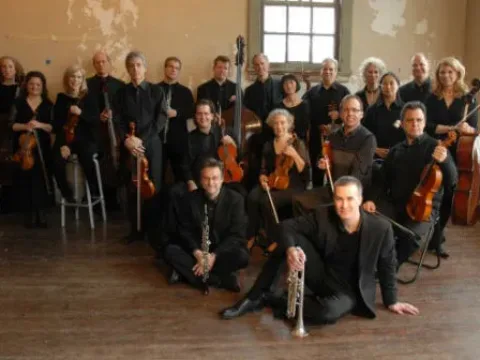
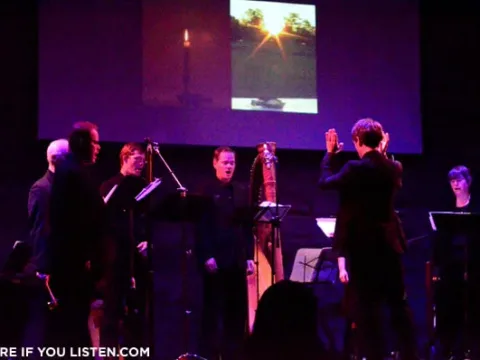
Orpheus Symphony Orchestra - Photo by Larry Fink

[Read more →]

24
Nov

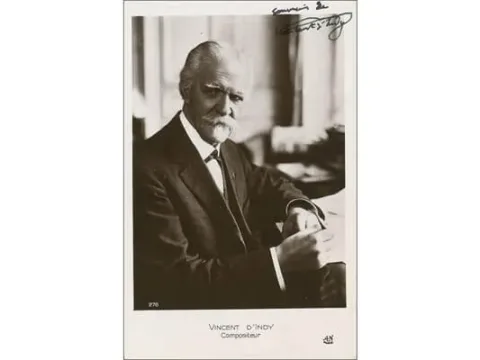
French Composers’ Names – Vincent d’Indy

Born in Paris from an aristocratic—a.k.a. 1%—family, d’Indy studied with César Franck at the Conservatoire de Paris. He also hung out with Franz Liszt and Johannes Brahms in Germany, and is famous for having created the Schola Cantorum de Paris in 1894. Cole Porter, among others, studied orchestration and counterpoint with d’Indy.

Vincent d’Indy

Vincent d’Indy was also on the wrong side of the Dreyfus affair

His two-syllable last name is composed of an i nasal (as in vin, pain, plein) resonating right behind one’s nose. The second syllable is just a long dee sound. Here it is:

Audio clip: Adobe Flash Player (version 9 or above) is required to play this audio clip. Download the latest version here. You also need to have JavaScript enabled in your browser.

Link to MP3 — ICIYL – Vincent d’Indy

And as usual, here is a nice HD video of the Berlin Counterpoint chamber ensemble, Sarabande et Minuet.

Vincent d'Indy Sarabande and Minuet – Berlin Counterpoint

Was it useful? Any other composer’s/piece’s name you’d like to see featured? Post a comment or find us on twitter: @icareifulisten

Next Page »