Hits & Misses at Zankel Hall
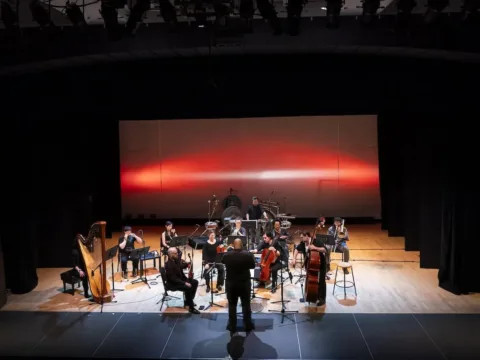
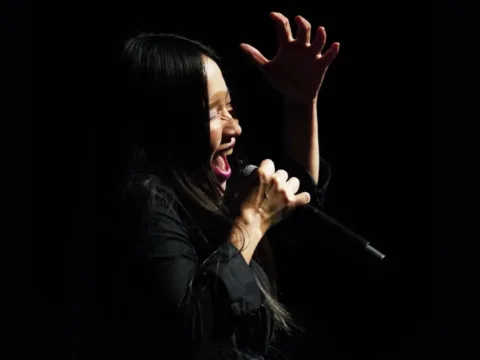
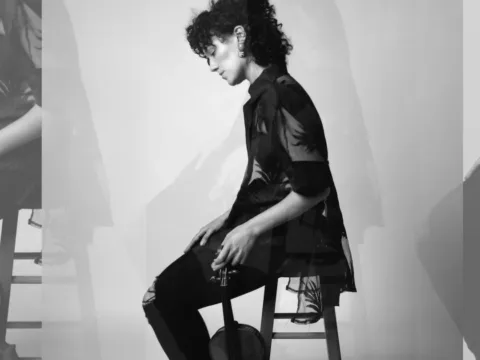
Finnish composer Kaija Saariaho is in residence at Carnegie Hall this season, and this past Monday night was a chance to hear three of her chamber works for strings alongside several pieces by young composers at Zankel Hall. The concert was part of a Young Artists Workshop, and featured some impressive young string players giving what were mostly premiere performances. While Saariaho’s pieces explored new and exciting timbres in different combinations of strings in a way that felt organic and substantive, the works by young composers fell far short of such substance.

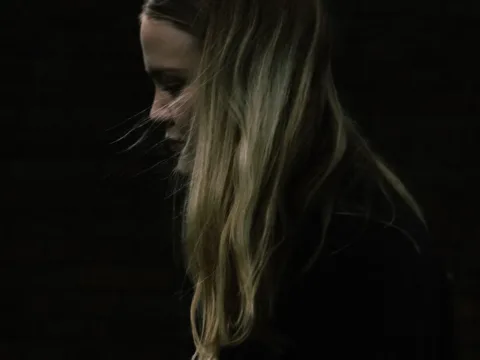
Kaija Saariaho
First the positive: it takes a lot to win me over to the use of electronics in new classical music. I’ve just heard far too many gimmicky attempts that just don’t create sounds of much interest. Likewise, as much as I love the new possibilities of extended techniques and the new string sounds first pioneered by the Polish avant-garde of the 1960s, the overuse and abuse of such techniques can get old quick. In Saariaho’s music, both electronics and new instrumental techniques are used in ways that draw new colors from the instruments that serve the composition’s intentions. Her music possesses a motivic clarity, excellent sense of large-scale phrasing, forms that make intuitive sense, rhythmic drive, and a feeling that the music is going places.
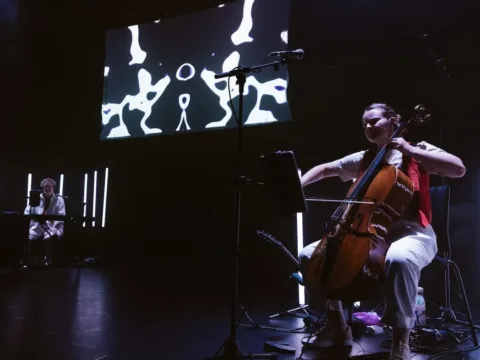
My favorite piece of the evening was Saariaho’s Folia for bass and electronics. In the sounds that emerged, there was a real organic connection between the bass and the electronic transformations it was subjected to. At times the bass sounded mammoth, full of rich overtones and a depth of sound that would have been impossible by strings and wood alone. At other times the subtle echoes or rounder tones coming from the speakers reeled you in closer. The hall seemed to accommodate the volume and richness of the sound well. I have to say that I’ve never heard anything that like this, and on that note alone the work was a success. But beyond creating new sounds, Folia explored its landscapes in arc phrases that spun ideas out of simple beginnings. Much was demanded from bass player Tony Flynt, and he worked his way through the different material with the right kind of patience and finesse that let the music breathe. Hearing this unique composition (its New York premiere) made this concert worth it, and I’d certainly be there if it’s performed again. Saariaho’s ongoing relationship with the IRCAM in Paris has clearly paid off.
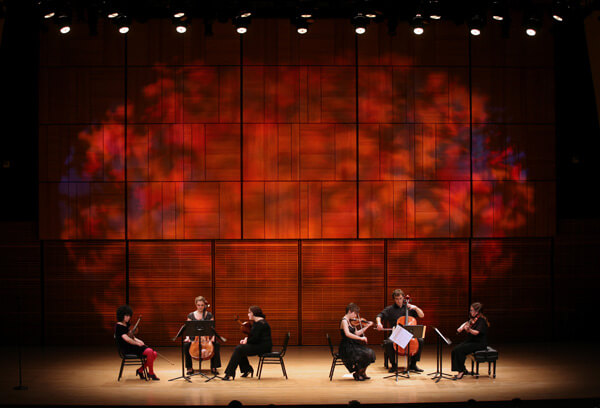
Photo by Steve J. Sherman
Saariaho’s other two works performed were devoid of electronics but full of timbral exploration. Cloud Trio, for violin, viola, and cello, succeeded in drawing out the different qualities of each instrument while maintaining coherence to the ensemble. While the piece was very much about texture, clear shapes emerged from the clouds, with rhythmic exuberance and motivic suggestions residing within the larger soundscape. New ideas were explored in coherent sections, and my favorite moment was a sudden jump into a faint pianissimo, as if (continuing the cloud metaphor) the air became almost empty for a moment.
Aure was a rarity in that the viola played the prominent melodic role, while the violin provided what was an often atmospheric accompaniment. Anna Pelczer’s round tone on the viola was a reminder of the emotional qualities of an instrument we don’t get to hear enough of in a more solo setting. While Aure was not a duet in the typical sense of the word, I was struck by the fullness of the sound and richness of the material. Its phrases were all spun out of a simple melody taken from Henri Dutilleux’s Shadows of Time. The text of this melody was taken from Anne Frank’s diary (“Why us, why the star?”), and Saariaho’s choice of instrumentation was a good fit for the child’s voice trying to make sense out of something impossible to make sense of.

Photo by Steve J. Sherman
The rest of the pieces were by composers in their (mostly early) twenties, and as much as I like to root for emerging musicians, I have to say that their works did nothing for me. Each was an attempt to compose with new string techniques that have developed in the last several decades, and often felt like just going from one technique to the next. There was little in the way of motivic clarity (let alone development), forms that made organic sense, or a feeling that something was being communicated from the composer to the audience. While several of the composers drew on outside artistic or conceptual sources for their music, this inspiration felt more pseudo-intellectual than substantive engagement. While some works were a little better than others, and each had a moment or two that sounded interesting (plucked high notes on the bass and cello, a good melodic counterpoint), no melodic gesture or idea sustained itself long enough to really have an impact.
To be fair, these compositions were worked on during a week of workshops, and maybe part of the point was to learn how to write with different string techniques. And I’m not familiar with any of the composers’ other works, and I’ll never write someone off just from hearing one piece. But every one of these compositions had the feel of an over-indulgence in techniques without any substance or emotion. I can deal with a good idea that wasn’t worked out well enough technically from a young composer, but I can’t really deal with a lack of solid good ideas, no matter how technically polished. If anything, these misses were a reminder that in a world of vast inequalities, a lot of hackneyed meaningless artistic work can be produced with at least some degree of technical proficiency but little in the way of meaning. Money can buy musical training at this or that conservatory, but money can’t buy heart and soul, and it’s difficult to create good music without the latter.
–
David Pearson is a saxophonist residing in NYC.

March 26th, 2012 at 9:01 pm
I am very far behind in my reading over here, but glad to at least start to catch up. Interesting and thoughtful review, as I’ve come to look forward to finding at I Care If You Listen. I’m wondering whether the younger composers pieces were perhaps performed in concert at too early a stage. Do you think that’s possible? And is it also possible that they suffered further being played next to Saariaho’s work?
July 9th, 2012 at 2:13 pm
I am aware that this comment is a little late; it has been quite a while since the concert. However, as a fellow audience member I disagree with you so much that I feel the need to share my thoughts. Where I disagree with you is in your scathing criticism of the works of the young composers. To start with, motivic clarity and form in music that is so focused on timbre can be difficult to fully grasp on first hearing. I did feel that the pieces varied in quality but I personally found strong motive content and development in each piece. That being said sometimes a ‘motive’ would not be a rhythm or a melodic fragment but a particular use of a timbre.
I’m not sure that your ears were open to new ways of thinking of motivic content or form. Were you missing a sense of direction? I felt that many of the works on the program dealt with form in terms of a feeling of timelessness or created form by juxtaposing this timelessness with sections of strong forward direction. You say “no melodic gesture or idea sustained itself long enough to really have an impact.” Why can’t a melodic gesture or idea be continually manipulated to create form, rather than simply sustained and repeated? Is having a tune stuck in your head a goal for you when attending a concert of new music? I do not believe that was a concern of many of the composers on the program-that does not give us a reason to write off their works as a ‘miss’.
“To be fair these compositions were worked on during a week of workshops…” In fact the pieces were commissioned by Carnegie Hall and finished well before the week of workshops. I’m sure that the works underwent some workshopping under the guidance of Saariaho, but it was clear to me that each composer had worked very hard on their pieces. For most of them, it was their first commission of this stature. I wholeheartedly disagree that the works had no substance or emotion.
The two stand-out works of the evening for me were Louis Chiappetta’s “Loops, Clocks, and Shadow” and Edmund Finnis’ “Relative Colour.” Both pieces were developed from strongly audible extra-musical concepts, employed excellent development of motivic content, organic form, expressive communicative content, fascinating use of scordutura and, in the case of Finnis’ work, spatial placement of the musicians.
I think it is unwise to be so scathing of such fresh works by any composer. My experience as an audience member (granted I am a composer myself) was very different than yours and to write off such promising young work does not help the cause of creating an open eared audience to works of complexity. I get the sense that your issues with the works by the composers come more from an aesthetic agenda than a true reaction to what the composers specific concerns were, and whether or not they achieved them. In this regard, I felt the majority of the works by the young composers on the program were ‘hits’.
July 9th, 2012 at 8:12 pm
Good evening Jesse. Thomas here. Thank you so much for taking the time to comment on David’s post. Your perspective on the concert is very informative and I found your arguments thought provoking. I will let David know that you’ve left an important comment and I hope he will find the time to answer here. Thank you again for reading our posts.
Best,
-Thomas
July 19th, 2012 at 12:28 pm
Apologies if this late response turns out long, but Jess Limbacher raises substantive issues that are in need of thoughtful consideration. As far as having an aesthetic agenda goes: guilty as charged. This agenda as such could be described as a stubborn belief that art music, including in its most experimental forms, should not be the preserve of the privileged elite but rather made the common property of humanity and reflect its best aspirations. Obviously as long as the world is shaped by profound inequalities this goal will be impossible to attain, but in our current predicament perhaps us musicians have some responsibility for working towards that goal. This agenda, however, does not preclude an appreciation for a myriad of musical forms or experiments that on first listen (especially by inexperienced audiences) will be incomprehensible—in other words I’m not advocating some sort of dumbing down of music to reach a broader audience.
Having an aesthetic agenda, however, does not equate with an instrumentalist approach to music criticism—or, to put it another way, Truth as an imperative can exist along with truth as objective discernment of experience. Jesse Limbacher is entirely correct that timbre can be used as motivic material, and the music of Saariaho, Berio, and Penderecki are salient examples of this fact. The craft of composition involves a skillful and intuitive use of the particular musical materials chosen. What I experienced at the March 20th Zankel Hall concert was a rather hackneyed use of string timbres that, at this point in time, no longer qualify as original. While of course composition students may very well need to undertake numerous exercises to master the myriad of new timbral possibilities that have emerged in the last century in the same way that composers used to (and perhaps still should) undertake numerous counterpoint and fugue exercises to master their craft, there is a difference between employing these techniques in the creation of art and attempting to pass off the mere use of such timbral techniques as some achievement deserving of commissions and professional performances.
Unfortunately the low standards, insularity, and easy access to elite musical institutions that increasingly defines music in academia seem to churn out this sort of pabulum in growing quantities. The philosophical relativism that has come to dominate academia (especially in the United States) has only compounded this problem. While I would prefer to support the work of aspiring composers, it seems that this problem, especially given its magnitude, requires deep-going criticism, which will, at the end of day, be beneficial to those seeking to do the hard work of honing their craft. Perhaps my review was a bit too harsh, but, as one great 20th century philosopher put it, sometimes it is necessary to go to excesses in order to right a wrong.
Finally, while extra-musical ideas can result in substantive organic art, I have yet to be emotionally or intellectually moved by the pseudo-intellectual flagellations of people who have spent their whole lives in the rarified atmosphere that is music academia. Maybe I just know too much about the world outside of this bubble, or maybe these attempts are too often forced and gimmicky with the end result feeling feigned rather than genuine and substantive. Perhaps it is time for us musicians to break out of this rarified rut and ask what our art has to contribute to the larger world (and I believe it has much to contribute in this regard) and in this context consider the kind of rigor that our art form requires.
July 23rd, 2012 at 4:23 pm
@David. It seems that we actually share many aesthetic values. I agree with your points about the issue’s of musical academia. This could generate a full article of it’s own. I do think that these issues were palpable in many of the pieces from the program, but certainly not all of them. I will continue to attest that, for me, the works I mentioned by Mr. Chiappetta and Mr. Finnis did not suffer from the issues of composer training that you bring up. I wonder if you would have heard them differently if they were not surrounded on the program by student pieces that suffer from problems you are so passionate about. I felt their extra-musical ideas and use of timbre were truly employed to artistic effect, and not merely intelectual show-off devoid of emotional content. Music is a subjective art, and it is fascinating how differently we felt about the program. Thanks for the exchange and I look forward to reading more of your posts!
Who Linked To This Post?