[:en]Author Archive[:fr]Archive Par Auteur
Posted by Evan Burke »
Add Comment »
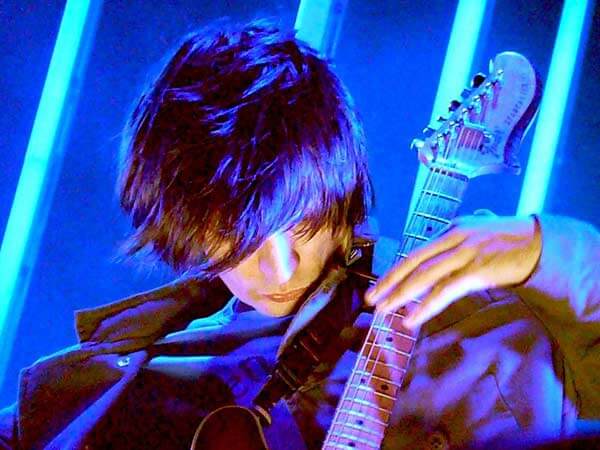
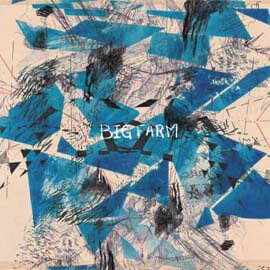
The temptation to over-intellectualize Big Farm’s self-titled debut is hard to resist.—which isn’t to say that it’s not an intellectual record. They clearly want you to think, and the album ranges far and wide over some esoteric musical landscapes. But while you’d expect a dense, nigh-impenetrable album from four luminaries of new music, the glory of Big Farm is the sheer exuberance that permeates every complex passage or heady lyrical idea. You’re welcome to dig in, searching for the compositional complexity and hidden meanings, but you’re also welcome to sit back and rock out.

Big Farm
[Read more →]
Posted by Evan Burke »
Add Comment »Anyone who writes music has to figure out how to balance structure and emotion. Logic and unpredictability. But experimental and avant-garde composers have a distinct set of problems not faced by most musicians. By definition, they’re operating outside normal musical parameters; that’s kind of the point of making strange music. (From here on out, I’m going to just use “outsider music” to mean all the experimental/avant-garde/atonal/free-improv/etc kind of stuff that operates outside of popular music…the kind of stuff you probably enjoy if you’re reading this blog). With this kind of music, it’s usually assumed that the composer has, consciously or unconsciously, woven some abstract concepts into their work, stuff you have to dig around and think about to find…and it’s also assumed that the audience knows that going in. After all, isn’t that the promise composers make to the listener in outsider music? “Come listen to my unusual, extended-technique bari-sax octet and, if you get in there and really listen, you’ll be rewarded with thoughts/feelings/reactions/emotions you’d never get from more traditional music”?

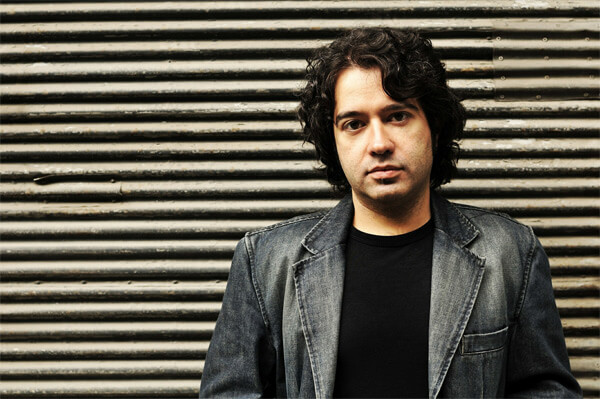
Erdem Helvacioglu
[Read more →]
Posted by Evan Burke »
Add Comment »
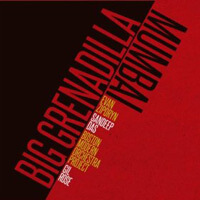
Evan Ziporyn‘s new recording, Big Grenadilla /Mumbai, manages to be futuristic while playing with tradition, exotic without being artificial. Ziporyn himself, a clarinetist, composer, and core member of Bang on a Can All-Stars, is clearly used to living in several simultaneous musical worlds, and has found a way to fuse them without compromising their essences. Rooted in Romanticism (both pieces are something like concertos, while Mumbai is also a semi-programmatic reaction to the eponymous city’s 2008 bombings), but thick with Hindustani classical music, avant-garde jazz, extended techniques, and minimalist melodies, the two works demonstrate Ziporyn’s unique approach to composing with the sound and energy of improvisation. Joining him in his endeavor are the Boston Modern Orchestra Project, conducted by Gil Rose, for both pieces, and tabla virtuoso Sandeep Das for Mumbai.

Evan Ziporyn – Photo by Andy Ryan
[Read more →]
Posted by Evan Burke »
Add Comment »
We all know, deep down, that classifying music is a fool’s game, yet we can’t seem to stop ourselves, can we? A friend tells us, “Oh, I love this (band/composer/musical entity)” and the first thing we ask, almost in spite of ourselves, is “What do they sound like?”. We can use cool-sounding adjectives, comparisons, and variations on other descriptions we’ve heard before, but it’s really all for naught until we actually hear the music. In the case of Darcy James Argue, it’s especially easy to get hung up on classification. At first glance, it’s easy: big-band jazz. Sure, he doesn’t sound much like any big band, past or present, but there’s horns and it swings sometimes, right? But listen closer, and it’s clear that the label doesn’t quite fit. There are too many shifting time signatures, too many rock riffs, too many black clouds of atonal darkness. So it’s more like modern classical, right? After all, it’s heavily composed, without much repetition. But that doesn’t work either. Argue sits nicely in the Ellingtonian tradition of writing tunes around key soloists whose style he knows well, allowing them to improvise over his through-composed works. And hey, if you think about it, even Ellington wasn’t so easy to categorize: if you had never heard jazz or the blues before, but then heard Such Sweet Thunder, you’d probably think it sounded like Debussy with a fat backbeat. So there’s improvisation and swing and all the instruments people identify as “jazz” instruments…can’t really call it classical either. So what’s left?

Darcy James Argue
[Read more →]
Posted by Evan Burke »
2 Comments »
What I find most interesting about the Brooklyn Youth Chorus is the elegance with which the ensemble, led by founder Dianne Berkun, serves two vital purposes at once: they are both an institution dedicated
to high-quality musical education for young singers (ages 7-18), as well as exciting and progressive performers, capable of tearing through John King’s eerie, experimental, Ligeti-like Muse Cast Aside War one night, then backing Elton John at MSG the next. It makes perfect sense, really: as an educational entity, BYC is dedicated to preparing their students for a professional career, which means they must be necessarily diverse in their repertoire. They must familiarize students with all manner of styles and techniques, and give them opportunities to perform in real-life settings. At the same time, they’re a choir of young, open-minded musicians in one of the music capitals of the planet. Why not collaborate with anyone and everyone in town? And who better to perform new works, written in new styles, than young musicians? Musicians who, while not yet at the technical level of older professionals (although not very far behind them, either), have also yet to develop habits, established patterns, and comfort zones? Isn’t it a boon to a composer to work with musicians who are still discovering their personal style and sound? And even play a role in their development, while also getting an opportunity to have their works performed? The concerts I attended recently, at the BAM Cafe on May 5 and at the Roulette Theater on May 19, featured music by modern composers like Missy Mazzoli, Bryce Dessner, and Shara Worden, whose pieces written expressly for the BYC defied easy categorization, emphasizing the adventurous nature of the ensemble.

Shara-Worden (My Brightest Diamond) performs her song "Before the Words" with BYC - Photo by Robert Maass
[Read more →]
Posted by Evan Burke »
6 Comments »
One would think that music and spoken word are two of the most complimentary art forms. They seem like they should be a perfect match; next to music, spoken word is the medium most reliant on pitch and rhythm, not to mention abstract concepts like cadence, consonance and dissonance. But the combination is a risky endeavor. One often hears music/spoken word collaborations that serve to diminish both components, with each distracting from the other, interfering with each other as opposed to providing contrast or counterpoint. But if there is a musical entity that could successfully marry the two, it’s Kronos Quartet, whose experience working in unusual musical settings is as wide as anyone’s. Working with authors Rula Jebreal, Marjane Satrapi, and Tony Kushner, they brought their experimental energies to the Metropolitan Museum for an evening-length work titled “Exit Strategies”.

Kronos Quartet – Photograph by Michael Wilson
[Read more →]