[:en]Author Archive[:fr]Archive Par Auteur

2
Sep

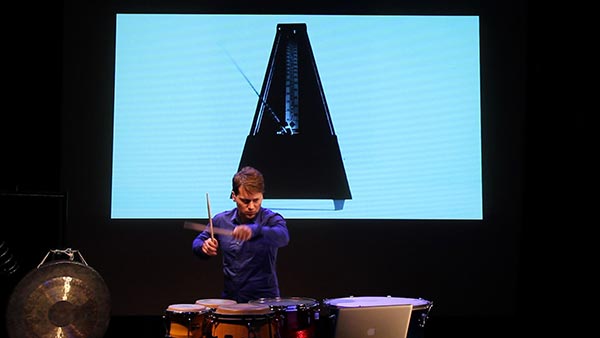
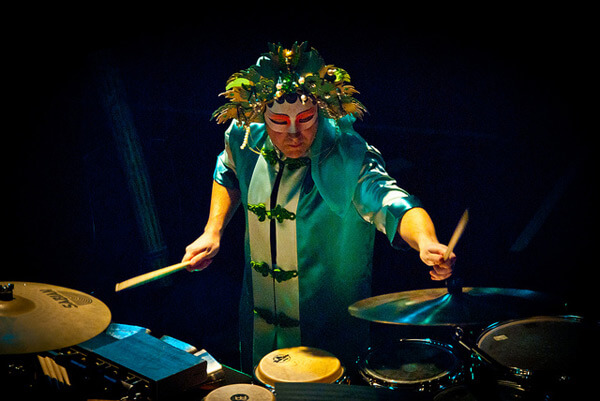
Thrashing the Sea God: Joby Burgess performs John McLeod’s short opera

tete-a-tete opera logoThe Tête à Tête Opera Festival at the Riverside Studios, London, seeks to present new and challenging operatic works and this year featured more than seventy performances representing over thirty companies. The spectrum was incredibly broad and represented the work of some of the leading composers of today. What makes this festival so engaging is its insightful attempts at presenting audiences with performances taking place not only in studios but in the foyer of the Riverside. Many of the operas are on the festival website and this will remain a great resource for those wishing to relive their experiences of new and often forward-thinking opera.

Joby Burgess performing Thrashing the Sea God - Flickr/The-Queen'sHall

Joby Burgess performing Thrashing the Sea God – Flickr/The Queen’s Hall

[Read more →]

29
Aug

An Eye for an Eye: David Knotts’ Wild Evening with the Papin Sisters

tete-a-tete opera logoIt is not only complete works that are presented at The Tête à Tête Opera Festival (Riverside Studios, London) but it also offers the opportunity to works in progress to get aired publicly and David Knotts’ An Eye for an Eye: A Wild Evening with the Papin Sisters is one of those incomplete works that was presented. This was the first performance of the first seven scenes. Knotts is a British composer, a finalist in the first BBC Young Musician of the Year Composer competition, and has led a fruitful career writing for leading ensembles and soloists. His output includes operas, notably his Stormlight for W11 Opera. His sound has a strong harmonic drive, rich with melodic invention, a sensitivity to timbre and fine control of rhythm to make him an ideal composer for theatre works.

David Knotts - Photo Kevin Leighton

David Knotts – Photo Kevin Leighton

[Read more →]

17
May

The Sinking of the Titanic: Gavin Bryars Ensemble @ Barbican

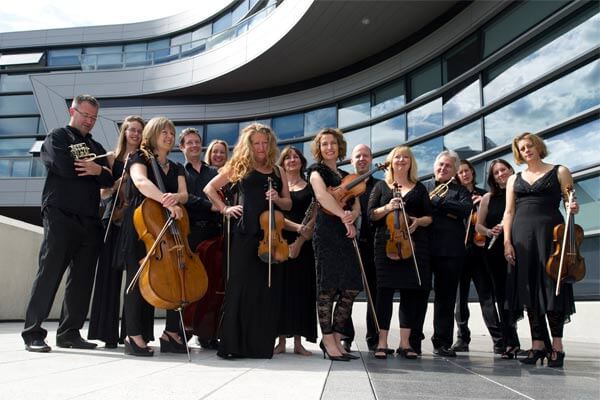
Just over one hundred years since the sinking of the Titanic. The tragedy was immortalized with emotional intensity and delicate musical sensitivity in The Sinking of the Titanic, written by British composer Gavin Bryars, and performed by him and his Ensemble at the Barbican on April 15. Bryars is recognised as a diverse musician and composer, his roots as a jazz bassist never far from the surface of this Titanic work. The Sinking of the Titanic (1969) was originally released on Brian Eno’s Obscure label in 1975 and is the composer’s first major work. Along with Jesus’ Blood Never Failed Me Yet (1971), this work sold over a quarter of a million copies when re-released in more recent performances. The Gavin Bryars Ensemble was founded in 1981 and continues to perform across the world.

Gaving Bryars and his ensemble performing "The Sinking of the Titanic" at Barbican Centre - Photo http://www.gavinbryars.com

Gaving Bryars and his ensemble performing "The Sinking of the Titanic" at Barbican Centre - Photograph by Mark Allan

[Read more →]

1
May

The Traces of Sound: Aisha Orazbayeva @ Kings Place

Violinist Aisha Orazbayeva presented a compelling programme of contemporary violin works on April 23 at Kings Place, London. It was great to hear her live after reviewing her recording for Nonclassical which showed her to be a violinist of strong interpretative abilities and tonal control. Such skills permit a breadth of expression for repertoire that needs strong leadership from the performer to make it a convincing experience for the listener. The recording made a strong impression and her live performance did not disappoint.

Aisha Orazbayeva - Photo Thomas Deneuville

Aisha Orazbayeva – Photo Thomas Deneuville

[Read more →]

6
Apr

The Body Electric: New Zealand composers at Kings Place, London

“A younger generation of New Zealand composers … have abandoned the country’s Romantic search for musical representations of landscape, and instead are reflecting upon increasingly personal engagements with concepts of space, memory and body” writes the curator of “The Body Electric”, Michael Norris. Kings Place is currently hosting a week of events exploring New Zealand music, poetry and ideas and “The Body Electric” was a programme of musical works that placed the body at the core of their conception.

The opening work placed an actual body as the focus – a solo performer with two microphones attached to his body that were amplifying his internal sounds and those created by the movement of the body as the performer did some Kendo-like moves. Chris Black’s persona elemental for solo performer and electronics made an engaging opening to the programme: sensitive lighting, words that seemed to make the performance feel like a meditative act rather than a musical one, the amplification of the performer’s heartbeat giving the work its pulse. ”By employing simple analogue technology, the performance is designed to preserve to a large extent the raw sounds of the body, in order to expose and communicate in a very direct way the organic complexity and expressive materiality of the body itself” (Chris Black). Michael Norris’ De Corporis Fabbrica for solo/amplified clarinet and visuals followed well – a piece based on the seven chapters of an anatomy book and this was also structured in seven movements to match the book. The images were extreme close ups of skin, an eye ball, and were not too dramatic to compete with the playing of Richard Haynes which was always expressive, with a broad spectrum of tonal control and vibrant articulation. Norris’ writing has a strong sense of line, and the overall structure of the work was compelling, with the features of the previous movements seemingly interacting with each in the seventh and final movement.

Michael Norris

Michael Norris

[Read more →]

27
Mar

Piano: Inside/Out – Zubin Kanga @ Kings Place, London

I always find it interesting to read discussions on the validity of extended techniques and less conventional methods of sound production; perhaps occasionally – and naively – considered to be ‘gimmicks’, repertoire that exploits a broader pallette of sound production can offer insights not only in the possibilities of writing for particular instruments but also open the audiences’ ears to something new. The pianist Zubin Kanga (currently a research student at the Royal Academy of Music, London) gave a brave programme of piano works at Kings Place in February that gave a snapshot of the unending potential this instrument possesses.

Zubin Kanga

Zubin Kanga

[Read more →]

Next Page »