Archive for the ‘5 questions to…’ Category

11
Jun

5 questions to Rebecca Lazier (dancer, choreographer, teacher)

On June 13-15, 2013, Rebecca Lazier and her performers will team up with Newspeak to present the NY premiere of Coming Together/Attica, an immersive, site-specific dance work to Frederic Rzewski’s iconic scores at The Invisible Dog Art Center. We asked 5 questions to Rebecca about this project.

How, for you, does Rzewski’s Coming Together / Attica speak to the present?

When I first heard Coming Together and Attica – a friend sat me down, gave me headphones and told me to listen – it was entirely without context. I was unaware of when it was composed, the source of the texts, the performer instructions, the compositional techniques, the significance of the riots in American history or of Rzewski’s controversial position in the music world. Despite my naiveté, I was immediately struck by its combination of structural clarity and emotional power. I wanted to know how it was made, what made it work and who Frederic Rzewski was.

As I learned about the history, context and structure of the piece, I noticed that while knowing more allowed me to appreciate the work and see it as an artistic challenge, the piece resonated with present-day compositional methods and provided insight into disturbing current cultural policies. As I delved into it, I realized the music isn’t just about a single moment of American history, but a work that continues to shed light on relevant abstract and political questions. Although it was inspired by the riots, Rzewski does not dictate an ideology in the piece, he invites the listener to create his or her own meanings. This allows it to be timeless.

For me, the piece speaks to the present on several levels. Rzewski’s compositional approach to merge formal constraints with political content is used across art disciplines today. Performing the piece now can also raise consciousness of the current prison crisis in America. An unprecedented proportion of our population is incarcerated. The perverse lack of rehabilitation services and the use of isolation to treat symptomatic behavior is tantamount to a humanitarian disaster and demonstrates questionable educational, cultural and political policy.

Rzewski’s work brought new perspectives to my experience of isolation and confinement, introduced possibilities for structural invention, motivated me to research the historical and current conditions of imprisonment, and enabled me to imagine social change through art.

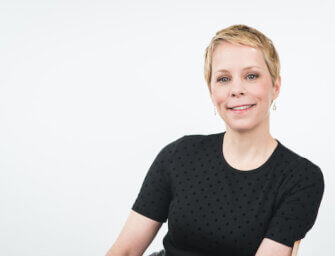
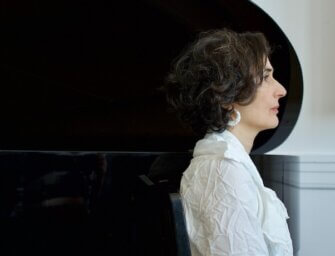
Rebecca Lazier - Photo by Bentley Drezner

Rebecca Lazier – Photo by Bentley Drezner

[Read more →]

5
Jun

5 questions to Sean Hickey (composer)

On May 28, 2013, Delos released Sean Hickey’s first album on the “Great American Label,” Concertos, featuring conductor Vladimir Lande, cellist Dmitry Kouzov and clarinetist  Alexander Fiterstein. We asked Hickey 5 questions…

What does it take, in 2013, to record two concertos?

Plainly, it takes money and some flexibility. Unless one has a lot of the former, recording a large orchestra is entirely prohibitive in this country without substantial private or corporate patronage. I am fortunate to have a great relationship with conductor Vladimir Lande, who splits his time between the States and Russia, and who in many ways made this Delos recording possible through his directorship of two fine St. Petersburg orchestras. My Cello Concerto had its Russian premiere at the Beloselsky-Belozersky Palace, a neo-Baroque edifice on the banks of the Fontanka River with Dmitry Kouzov – who commissioned the work – in the solo role. The Clarinet Concerto saw its Russian premiere at the Large Hall of the St. Petersburg Philharmonic, one of the greatest halls in all of Europe, with Alexander Fiterstein as soloist.

I very much appreciate the working methods of the Russian orchestral musician. In my experiences in performances and recordings there, they have worked and rehearsed tirelessly and without complaint. (If they did, my limited Russian didn’t permit to me understand.) In both concertos, the distance between first rehearsal and final performance was amazingly large. These players simply dig in for hours until they get a part right, breaking every couple of hours for a brief cigarette and a flask of tea. Both works were recorded in the legendary Melodiya Studios on Vasilevsky Island in St. Petersburg, known from Soviet times as producing recordings from the likes of Shostakovich, Rostropovich, Mravinsky, and many others.

Sean Hickey

Sean Hickey


[Read more →]

3
Jun

5 questions to Alan Pierson (conductor, artistic director)

Alan Pierson is the conductor and artistic director of both the Brooklyn Philharmonic and Alarm Will Sound.  The Brooklyn Phil’s headline concert on June 8 [sold out] and 9 at BAM, entitled “You’re Causing Quite a Disturbance,” will feature an original collaboration between Erykah Badu and composer Ted Hearne, inspired by Erykah’s album, New Amerykah Part One: 4th World War.

How did this project come about? The Brooklyn Phil has been doing some pretty bold programs this season, but this one seems to be on a different level, musically, conceptually, and logistically.

Yasiin Bey and his mom, Umi, introduced me to Erykah last summer after her show at the Afropunk Festival. Richard Dare had sent me her “Window Seat” video, and I thought she’d be a fascinating choice for a Brooklyn Phil collaborator. Yasiin, Umi, and I talked to Erykah about what the Brooklyn Phil was doing, and she immediately suggested New Amerykah as ground for an orchestral collaboration. I thought it was a great idea; the sonic richness and conceptual ambitions of those albums made them ripe for a symphonic treatment.

Alan Pierson - photo by Michael Rubenstein

Alan Pierson – photo by Michael Rubenstein

[Read more →]

31
May

5 questions to Dan Trueman (composer)

Composer and innovator Dan Trueman tinkers with gadgets new and old in search of novel musical sounds. As a faculty member of Princeton University, Trueman directs the school’s Laptop Orchestra. He is also a master of the Norwegian Hardanger fiddle, which often plays a prominent role in his compositions. A recording of Trueman’s work “neither Anvil nor Pulley” – a collaboration with Brooklyn-based ensemble So Percussion – was released on May 28, 2013. “neither Anvil nor Pulley” features several of Trueman’s unique instrumental creations, including drones powered by speaker drivers and audio samples controlled by repurposed golf video game controllers.

In neither Anvil nor Pulley, you utilize a wide variety of instruments, ranging from wood blocks and bass drums to turntables and drum machines. Your music criss-crosses the boundaries between acoustic and electronic sound. Tell me more about your compositional process and how you envision these complex soundscapes. What influences you in the creative process?

I have a studio full of good stuff, like fiddles, drums, laptops, gaming interfaces, and custom things I’ve built, and I spend a lot of time using all of them in various ways as I wrestle with trying to create new situations for making music (in other words, composing new pieces!). For me, composing is one of the most difficult and engaging things on the face of the planet to do, and I find that I’m usually most successful when I’m really not quite sure what I’m doing, or what the final piece is that I’m after. So, rather than imagining a target soundscape or composition, I mostly think about what people will be doing when they actual play the music I’m creating. In the case of So Percussion, I really wanted to create instruments and music that challenged their musicianship but were also inspiring to play, getting them to musical places they’ve never been before. This meant that while composing I spent a lot of time building instruments, trying them out, seeing which ones inspire, and then trying to find good notes and rhythms to compose for and with them. With neither Anvil nor Pulley, I knew I was getting somewhere when I found myself getting lost for several days playing with one particular digital instrument – the “synchronic metronome” used in the second movement – while finding seemingly endless possibilities.

Dan Trueman

Dan Trueman

[Read more →]

16
May

5 questions to Donnacha Dennehy (composer, artistic director of Crash Ensemble)

Until I heard Alarm Will Sound perform scenes from The Hunger, your work-in-progress about the Great Irish Famine of 1845-1852, my idea of traditional Irish music was the Clancy Brothers! The sean-nós (“old style”) recordings you incorporate are at once uplifting and haunting, but Rachel Calloway’s rendition of Annals of the Famine had me a little choked up. How did you go about setting such an unusual and emotion-laden source of text?

The Hunger will ultimately be an evening-length piece concerning itself with the topic of the Great Famine in Ireland in the 19th century. I’m not interested in this story for some nationalist reason, but because it is a profound and human focus for looking at the question of laissez faire economics (the free market) versus the responsibility of governance. That was the ideological battle at the heart of government in London (at that time Ireland was part of the British Empire, then the wealthiest entity in the world, possessing 40% of the world’s wealth). The famine was definitely an avoidable disaster. The free market does not always behave morally, as we know. And this is a kind of catastrophic instance of the impact of not interfering with its workings until too late. The second part of the piece will involve interviews with economists (in a great kind of babble of verbal sound) which will be interleaved with the more personal voices of Asenath Nicholson’s first-hand accounts and that of sean-nós song which basically is a signifier of the sufferer in this context. I concentrate on this story because it irrevocably changed Ireland, and it is something I know on an emotional level. I wanted to also explore it on an intellectual and artistic level.

Donnacha Dennehy - Photo by Sophie Dennehy

Donnacha Dennehy – Photo by Sophie Dennehy

[Read more →]

10
May

5 Questions to Parlour Tapes+ (contemporary music recording label)

PTplus-Logo-250w
Chicago, the wellspring of collaborative artistic ventures like the Association for the Advancement of Creative Musicians (AACM), eighth blackbird, the International Contemporary Ensemble (ICE), and Ensemble dal Niente, has done it again. A group of 20-something creative slashes — composer/cellist/producer Kyle Vegter, violinist/singer-songwriter/blogger Ellen McSweeney, composer/soprano Jenna Lyle, and composer/writer (and, full disclosure, ICIYL Contributing Editor) Andrew Tham — has banded together to create Parlour Tapes+, a contemporary music recording label and media collaborative. We spoke with the principals in advance of their public launch event “The Guilty Party” on Thursday, May 16, 2013.

How did Parlour Tapes+ get started and what are your ambitions?

Andrew: Parlour Tapes+ began with a discussion between Jenna and Kyle about the current state of Chicago’s new music scene. There’s an abundance of intriguing ensembles and composers here who have not been properly recorded. The idea of giving them a recording home has been on the tip of many tongues, but no one has pursued it. So Jenna and Kyle decided to pursue that and Ellen and I joined in.

Our first goal is to export what’s going on here in Chicago to the rest of the world. There’s a lot of buzz about what musical artists are doing here; we want to give the world clear evidence of this. Our broader ambition is to contribute to the perception of contemporary classical music in an interesting way and to pique new curiosity among the uninitiated.

Kyle: Also, we couldn’t be doing this without our caring and daring partner, High Concept Laboratories. They’re helping with administrative and promotional support, event production consultation, and so much more.

Parlour-Flowers-600w

Jenna Lyle, Kyle Vegter, Andrew Tham, and Ellen McSweeney of Parlour Tapes+ (photo credit: Parlour Tapes+)

[Read more →]

Next Page »