Posts Tagged ‘Alan Pierson’

3
Jun

5 questions to Alan Pierson (conductor, artistic director)

Alan Pierson is the conductor and artistic director of both the Brooklyn Philharmonic and Alarm Will Sound.  The Brooklyn Phil’s headline concert on June 8 [sold out] and 9 at BAM, entitled “You’re Causing Quite a Disturbance,” will feature an original collaboration between Erykah Badu and composer Ted Hearne, inspired by Erykah’s album, New Amerykah Part One: 4th World War.

How did this project come about? The Brooklyn Phil has been doing some pretty bold programs this season, but this one seems to be on a different level, musically, conceptually, and logistically.

Yasiin Bey and his mom, Umi, introduced me to Erykah last summer after her show at the Afropunk Festival. Richard Dare had sent me her “Window Seat” video, and I thought she’d be a fascinating choice for a Brooklyn Phil collaborator. Yasiin, Umi, and I talked to Erykah about what the Brooklyn Phil was doing, and she immediately suggested New Amerykah as ground for an orchestral collaboration. I thought it was a great idea; the sonic richness and conceptual ambitions of those albums made them ripe for a symphonic treatment.

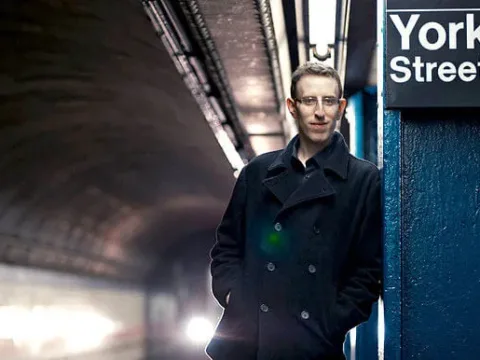
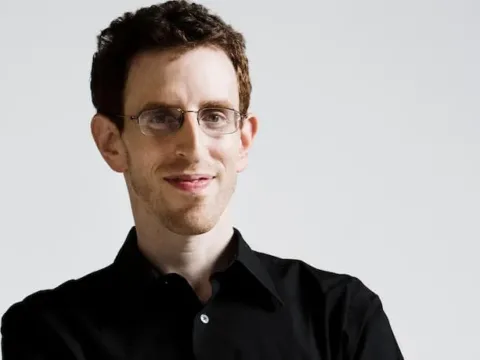
Alan Pierson - photo by Michael Rubenstein

Alan Pierson – photo by Michael Rubenstein

[Read more →]

27
Nov

Thought: Crash Ensemble at Project Arts Centre Dublin

2012 is a big year for Crash Ensemble. They are celebrating 15 years since they were formed by now Co-Artistic Director and composer Donnacha Dennehy. Over the next year they will hold residencies at the Project Arts Centre in Dublin and the Huddersfield Contemporary Music Festival before touring America in 2013, continuing their mission to be a leading force in contemporary music in Ireland and Europe since 1997. The ensemble presented Thought, the first event of their Project Arts Centre residency, on November 2, 2012, featuring compositions of Glenn Branca, Nico Muhly, Kevin Volans, and Dennehy.

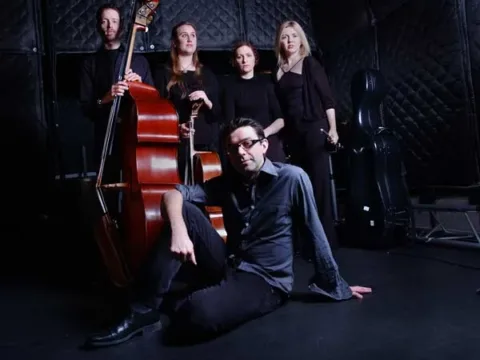
Crash Ensemble (photo credit: Sophie Dennehy)

[Read more →]

14
May

Brooklyn Village at Roulette, by the Brooklyn Philharmonic (Est. 1857)

Last March, and for two nights only, Brooklyn Village was performed in Downtown Brooklyn. Advertised as a “multimedia spectacular,” the show took the audience on a time travel to honor the cultural heritage of Downtown Brooklyn, and showcased the trifecta of what some people call Brooklyn’s cultural renaissance: the newly “rebooted” Brooklyn Phil, the Brooklyn Youth Chorus (BYC) and Roulette.

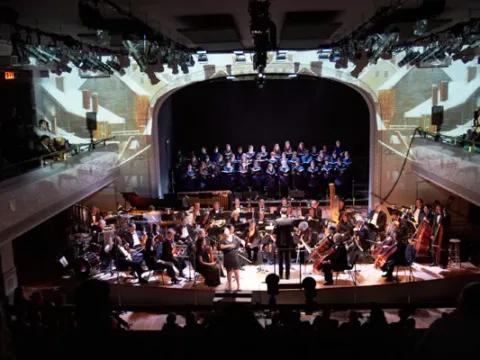
Alan Pearson and the Brooklyn Philharmonic - Photo by Joshua Simpson

Alan Pierson and the Brooklyn Philharmonic – Photo by Joshua Simpson

From the very beginning, the retro, era-bending tone was set since the program itself came in the form of a fake issue of the Brooklyn Daily Eagle whose date had been carefully smeared to remain intentionally vague. The “articles” introduced the pieces, the performers and the composers in a mockingly sensational way (Brooklyn Indie Rock Musician Sufjan Stevens Detained by NYPD). The dramatic dimension was introduced by Alan Pierson who greeted the entire hall with great enthusiasm (I’m paraphrasing): in these uncertain times of crisis, what Brooklyn needs is more music! Pierson thanked the people who bravely crossed the frozen east river on a sled, and the audience seemed to enjoy the good-natured, humorous atmosphere.

[Read more →]

20
Mar

5 questions to David T. Little (composer, former executive director of MATA)

From the Brooklyn Phil website:

Over two nights at Roulette Theater in Brooklyn (509 Atlantic Avenue near Third Avenue, Brooklyn, NY 11217), 800 audience members will be propelled into a musically immersive social event examining linkages between the 19th century and our own time that trace the development of Brooklyn from a small village to a major global super city. Locally written orchestra and choir music, spoken verse, staging, costumes, audience interaction and film will combine together to form a new shared voice as Brooklynites celebrate our collective ability to adapt to the relentlessness of change.

David T. Little is one of the composers (along with Matthew Mehlan, Sarah Kirkland Snider, Ludwig van Beethoven, George Frederich Bristow, Aaron Copland and Sufjan Stevens) whose music will be performed. Listen to three excerpts from Am I Born:

Had you ever worked with the Brooklyn Youth Chorus, or written for children voices? Did you have to adjust your writing?

I hadn’t worked with the BYC before, and I’d never written specifically for young singers like this. But I have written a lot of vocal music over the last ten years or so, think a lot about the voice, and have done a fair amount of (amateur!) singing myself, so it felt really natural. The thing that was really tricky about this project was trying to get the right sound from the singers. The Sacred Harp tradition isn’t a trained vocal tradition, or at least not in the classical sense. The goals in the sound production are very different, and therefore so are the specific techniques used. Trying to get a group of well-trained classical singers to sound completely untrained and raw is always tricky, and has to be done delicately, since you don’t actually want to damage anyone’s instrument. So it becomes about illusions in a way: you have to somehow create the illusion that they are screaming without actually asking them to scream. I used a few orchestration tricks, and worked really closely with the BYC’s Dianne Berkun and David Harris (who actually grew up in the Sacred Harp tradition) to help establish a game plan, and a list of techniques: certain vowels got flattened, certain diphthongs altered. It’s been really interesting, and I’m very happy with the results we’ve gotten.

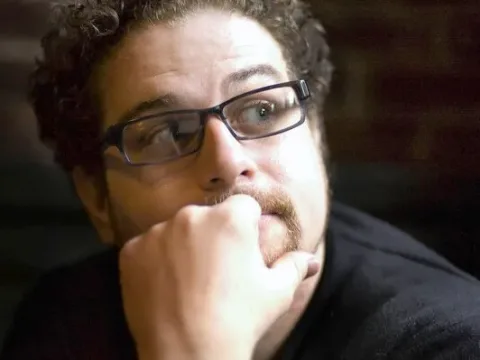
David T. Little

David T. Little

[Read more →]

27
Oct

SONiC Festival – Alarm Will Sound at Roulette

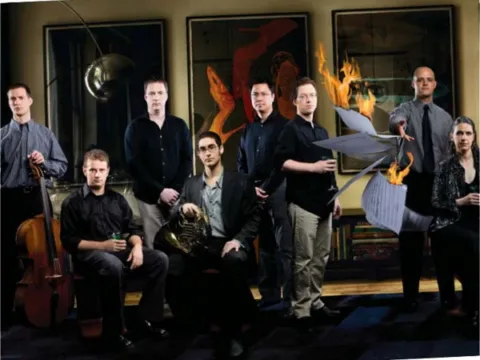
The new music ensemble Alarm Will Sound put on a concert of six contemporary works on Friday, October 21st (as a part of the SONiC new music festival) at the beautiful Art Deco theater hall of Roulette, located in the arts district of Brooklyn. As in most such concerts of new music, the different pieces were incredibly varied in length, structure, tonal language, and almost any other musical attribute one could think of. Additionally, though all 20 members of AWS played or sang or both on every piece, there were some differences between the pieces’ instrumentations: besides the usual doublings one expects from classical players (the flautist switching to piccolo, for instance), the concert included electric violin, electric bass, electric guitar, accordion, two vocal solos, and several instances of either backing vocals or strange gasps, sighs, and other nonstandard vocalizations from various members of the ensemble.

Alarm Will Sound

Alarm Will Sound

[Read more →]