Posted by Sam Reising »
Add Comment »Music of Chinary Ung | New York New Music Ensemble

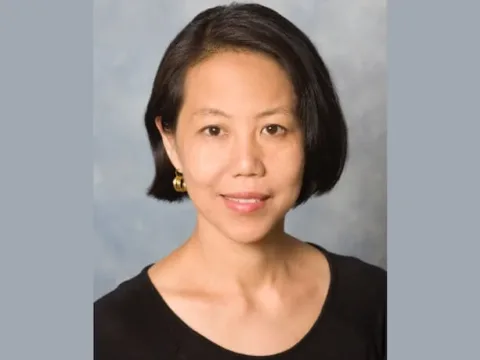
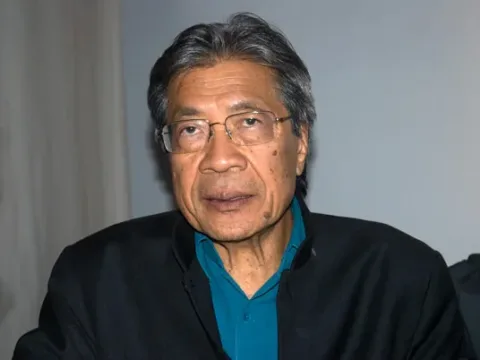
Chinary Ung – Photo Larry Dunn
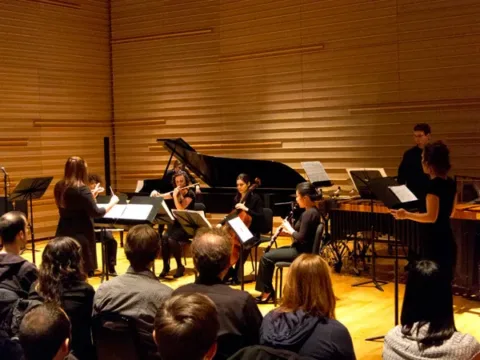
The New York New Music Ensemble performs the music of Chinary Ung at (le) poisson rouge.
Tuesday, April 16 at 7:30 PM
Tickets $15 advance, $20 day of show
(le) poisson rouge, 158 Bleecker Street, New York, NY
..:: Website
Contrasts #1
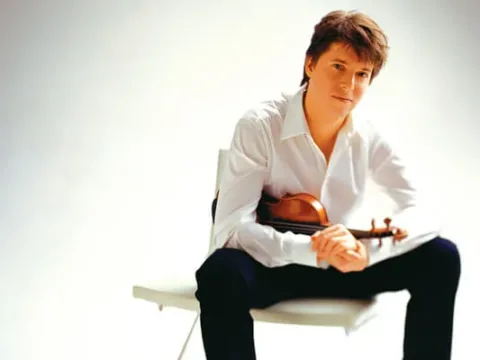
Violinist Christian Tetzlaff and pianist Alexander Lonquich return to 92Y with composer-clarinetist Jörg Widmann, cellist Tanja Tetzlaff and pianist Cristina Barbuti for three nights of boldly contrasting chamber music. This concert features music by Widmann, Mozart, and Bartok.
Tuesday, April 16 at 7:30 PM
Tickets from $36
92nd Street Y, Lexington Avenue at 92nd St, New York, NY
..:: Website
MATA Festival | MATA’s Quinceanera Celebration

Ensemble Meitar – Photo by Noa Dolberg
[Read more →]
Posted by David Pearson »
2 Comments »
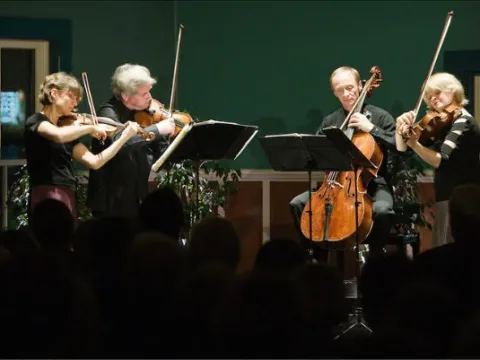
The New Zealand String Quartet has shown much care and attention to detail in bringing to life the music of four Asian composers on their latest recording for Naxos. The CD, Asian Music for String Quartet, presents disparate sound worlds influenced to varying degrees by Asian music and instruments. The techniques, timbres, and stylistic nuances demanded of the performers would be a challenge for the best of ensembles, and it is testament to the New Zealand Quartet’s hard work, expressive sensitivity, and diligent interpretation that each composition’s unique qualities shine.

New Zealand String Quartet, image © Robert Catto, www.catto.co.nz, all rights reserved.
[Read more →]
Posted by Arlene & Larry Dunn »
1 Comment »Composer Chinary Ung, Professor of Music at UC San Diego and the first American recipient of the international Grawemeyer Award in 1989, was kind enough to answer our 5 questions after a recent Chicago concert featuring his works.
Your early compositions during your studies at Columbia are often described as “post-serialist.” How has your compositional aesthetic evolved from that point to the music you are creating now?
I studied and trained at Columbia University and obtained my doctoral degree in 1974. Definitely you can say that my first works were post-serialist in nature. A good example is Tall Wind, which I think of as somewhat Webern-ist. Then in 1977, I took my first teaching position at Northern Illinois University. This was also the time of the devastating war in Cambodia and that motivated me to immerse myself in studying my native music. The next 11 years were quite busy for me – establishing my academic career at NIU and pursing my interest in Cambodian music. I stopped composing completely except for Khse Buon, a solo cello piece I wrote for my former NIU colleague, Marc Johnson of the Vermeer Quartet. That was the first step towards my later music, which is much different from the post-serial style, incorporating both Eastern and Western musical ideas.
In weaving Cambodian musical themes and sounds into your music, references have been made to the color spectrum. You have been quoted saying “If East is yellow and West is blue, then my music is green.” Can you tell us more about how this plays out in your compositions?
That idea dates back to 1990. It was a kind of metaphorical way to explain to the general audience how my music integrates elements of both cultures. But as I further developed my musical approach, I changed my thinking about this. I don’t believe it is such a useful metaphor anymore.

Chinary Ung – Photo Larry Dunn
Posted by Arlene & Larry Dunn »
2 Comments »
New music dynamo Ensemble Dal Niente presented a stirring program of music by Cambodian-American composer Chinary Ung at High Concept Laboratories in Chicago on Sunday, September 16, 2012. Fresh from their triumphant residency at the Darmstadt International Summer Course for New Music, at which they became the first group to receive the Kranichstein Music Prize, the concert was a benefit to help fund their 2012-13 concert season. Dal Niente percussionist Gregory Beyer organized and produced the event, which was an encore presentation of a concert originally offered as part of the Imagining Cambodia conference at Northern Illinois University.
Ung first came to the US in 1964 to pursue advanced study at Manhattan School of Music in clarinet performance. While there, he discovered a talent for composition and eventually received a doctorate from Columbia University under the guidance of Chou Wen-chung. Ung remained essentially in self-exile here during the Cambodian holocaust at the hands of the Khmer Rouge. This isolation stimulated a deep immersion into Cambodian music and arts, through which he became an important cultural voice for Cambodian people. Ung’s music conveys his own unique blend of Western musical abstractions and Eastern musical sounds. He was the first American recipient of the prestigious Grawemeyer Award (in 1989), among the many honors he has been accorded.

Ensemble Dal Niente
[Read more →]
Posted by Elias Blumm »
1 Comment »
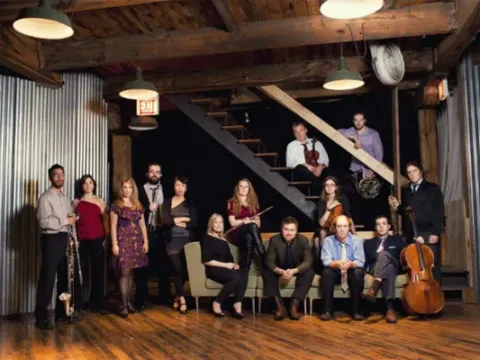
The Norman S. Benzaquen Hall at the DiMenna Center for Classical Music has the appearance of a spruced up practice room, a tall, raw space with instruments piled in the corner. This was no less effective of an environment for Hotel Elefant, a group overflowing with young, dedicated musicians (seventeen in all) who have banded together in order to—as their press kit affirms—interpret the music of “innovative, living composers.” There is something in the collaborative camaraderie within the group, despite its largesse, that speaks to the delight each member takes up in this goal, and in that way the charm of the hall only added to the affect: a bunch of crazy kids lovingly playing a bunch of crazy music, some of it written from within the clique, all of it sounding totally personal in their hands.

Meg Zervoulis conducting Ung’s … still life after death
[Read more →]